

Making Homemade Bread: Recipes & Storage Tips
A warm loaf can turn a simple meal into something you look forward to: thick toast at breakfast, a sandwich made with soft homemade bread, or focaccia torn into pieces beside a bowl of soup. You do not need to master sourdough to begin. These three homemade bread ideas offer different textures and techniques, so you can choose a bake that fits your day.
Start with one recipe, learn how its dough feels, and make it again before experimenting. Then give the finished bread as much care as the baking: let it cool, choose the right wrapping, and keep the portion you will eat soon in a dedicated bread box.
Choose your first homemade bread
- Crusty no-knead bread: a rustic loaf for soup, dipping, and toast; useful when you want to mix ahead.
- Soft sandwich bread: an everyday loaf for packed lunches, breakfast, and French toast.
- Herb focaccia: a flat, olive-oil-rich bread for sharing or serving alongside dinner.
The concise recipes below use King Arthur Baking formulas, with instructions rewritten here. Each links to the original recipe for additional technique notes. Use a kitchen scale where possible, and check the dough as well as the clock: a cool kitchen can make rising slower.
1. Crusty no-knead bread
Makes: 3–4 small loaves. Allow: at least 5½ hours, plus cooling.
Ingredients: 900g all-purpose flour; 680g lukewarm water; 18g table salt; 14g instant yeast. Have 1 cup hot water ready for baking.
- Stir the four dough ingredients together in a 6-quart food-safe bowl or container until no dry flour remains. The dough will be sticky. Cover; rest at room temperature for 2 hours, then refrigerate for at least 2 hours.
- With floured dough and oiled hands, shape a 400–540g portion into a round. Refrigerate the remaining dough, using it within 7 days. Place the round on a lightly greased baking sheet; dust with flour and cover loosely.
- Let it expand for about 1 hour, longer if cool. Heat the oven to 450°F, with a shallow metal pan on the lower rack.
- Score the loaf ½ inch deep. Put it on the middle rack; carefully pour the hot water into the lower pan. Avoid the steam; never use glass for this pan.
- Bake 25–35 minutes until deeply golden. Cool on a rack.
Original recipe and technique notes
2. Soft sandwich bread
Makes: one loaf in an 8½ × 4½-inch pan. Allow: about 3 hours, plus cooling.
Ingredients: 227g milk; 28g butter; 2 teaspoons instant yeast; 25g sugar; 8g table salt; 360g all-purpose flour.
- Bring the milk to a simmer and pour over the butter. Cool until lukewarm. Mix in the remaining ingredients.
- Knead for 6–8 minutes until smooth and flexible. The dough should feel soft without being sticky; adjust with a little flour or milk if necessary.
- Place in a lightly oiled bowl, cover, and let rise for about 1 hour, until puffy.
- Shape an 8-inch log and place in the greased loaf pan. Cover loosely and rise for about 1 hour, until the center stands roughly 1 inch above the rim.
- Preheat to 350°F near the end of rising. Bake 30–35 minutes until golden and the center reaches 190°F. Remove from the pan and cool on a rack before slicing.
Original recipe and technique notes
3. Easy herb focaccia
Makes: one 9 × 13-inch bread. Allow: about 1½ hours, plus cooling.
Ingredients: 420g all-purpose flour; 340g warm water; 1¼ teaspoons table salt; 1 tablespoon instant yeast; 5 tablespoons olive oil, divided; another 1 tablespoon oil for the top; dried herbs, optional.
- Lightly grease a 9 × 13-inch pan, then add 2 tablespoons olive oil to the base.
- Combine the flour, water, salt, yeast, and remaining 3 tablespoons oil. Beat with an electric mixer on high for 60 seconds.
- Transfer the sticky dough to the pan. Cover and let rise for about 1 hour until puffy. Meanwhile, heat the oven to 375°F.
- Press shallow dimples into the dough with a fingertip. Drizzle with the additional tablespoon of oil and sprinkle with your chosen dried herbs.
- Bake 25–30 minutes until golden. Wait 5 minutes, then move the bread to a rack.
Original recipe and technique notes
For another way to organize your cooking, see Homemade Seasoning Blends. Keep your favorite herb combinations labeled and ready for the next bake.
From oven to bread box: cool first

Give bread time to cool completely on a rack. Closing warm bread inside a bag or box traps moisture that can soften the crust. Keep the amount you expect to eat soon at room temperature; slice, wrap, and freeze the rest.
Wrapping helps retain a loaf’s moisture, but it also softens a crisp crust. For soft sandwich bread, a food-safe bag inside the box is a practical choice. For crusty bread, decide whether a soft interior or a crisp crust matters more, and expect the texture to change after baking. King Arthur Baking’s bread-storage guide explains these trade-offs and recommends a dark storage location away from sunlight.
Why give homemade bread a dedicated home?
After measuring, mixing, and waiting for a loaf to rise, it is satisfying to have a proper place for it. A FINESSY bread box brings several everyday benefits to the kitchen:
- A covered place for your daily bread. The closed lid shields the contents from light and everyday dust. Keep the box itself away from the stove and direct sunlight.
- A tidier countertop. Loaves, rolls, and their packaging stay together rather than spreading across the breakfast area.
- Easy everyday access. The opening lid makes it simple to reach for breakfast or put bread away after a meal.
- A reusable, sturdy home. Stainless-steel construction suits regular kitchen use, and the boxes arrive ready to use without assembly.
- A choice that fits your routine. Choose the medium size for a smaller bread station or the wider family size when you keep more baked goods on hand.
A bread box supports good storage habits; it does not stop bread aging or guarantee a set number of fresh days. Freshness depends on the recipe, wrapping, temperature, and humidity. Keep the interior clean and dry, remove crumbs regularly, and avoid packing bread tightly.
Choose the size for your kitchen
The medium options are us_bread_box_white and us_bread_box_gray, in white and gray. Their listed dimensions are 12.5 × 10 × 7 inches. They suit a dedicated bread corner where counter space matters.
For a wider option, us_bread_box_lg_wh comes in white, with a roll-top lid and approximate dimensions of 17.3 inches wide × 10.4 inches deep × 6.8 inches high. Choose it when you want more room for your usual selection of baked goods.
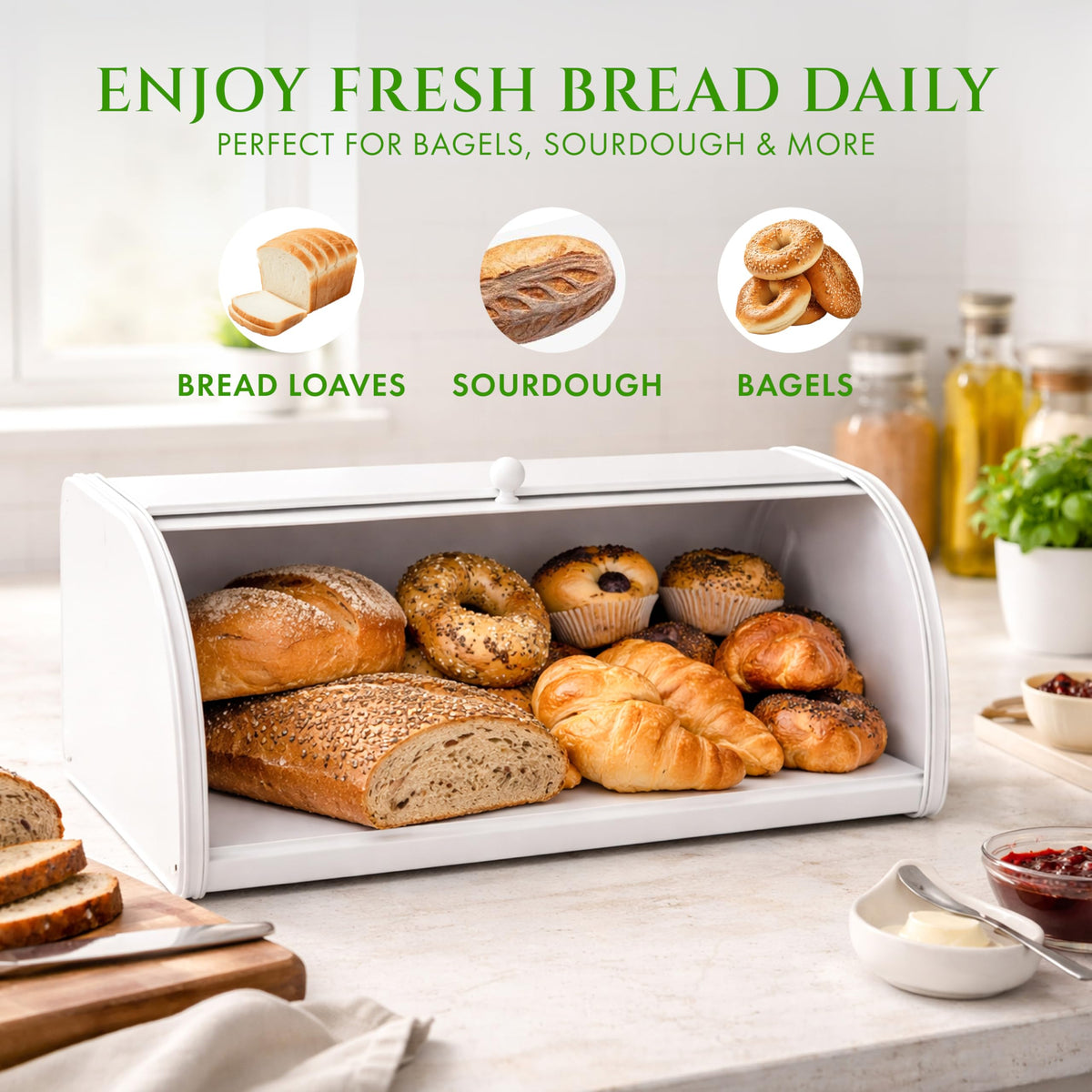
Measure your counter and consider the shape of the loaves you bake. Listed box dimensions are not a promise that every loaf will fit; allow room for the lid to operate and for bread to be lifted out easily.
Homemade bread FAQs
Do I need a sourdough starter?
No. All three recipes here use commercial yeast. They offer a straightforward way to learn dough handling before taking on a starter-feeding routine.
Why did my dough take longer to rise?
Rising times are a guide. Follow the recipe’s visual cues as well as its timings, especially in a cool kitchen. Check that your yeast is within its use-by date, and use warm rather than hot liquids.
Should bread go in the fridge or freezer?
For plain bread you will not finish soon, freezing is generally the better choice for texture; refrigeration can speed staling. Slice and wrap cooled bread in portions so you can take out only what you need. See King Arthur Baking’s storage advice.
Can I put warm bread straight into a bread box?
Let it cool fully first. A bread box is for storing finished bread, not for cooling a loaf or proofing dough.
Will a bread box prevent mold?
No storage box makes that guarantee. Keep it clean and dry, check bread regularly, and freeze extra portions early. Bread with perishable fillings or toppings needs the storage conditions specified by its recipe.
Choose one loaf to bake this week, keep the portion you will eat soon within reach, and freeze the rest. A simple routine makes homemade bread easier to enjoy beyond baking day.
Bread scenes are AI-generated illustrations; actual baking results vary. Recipes are credited to King Arthur Baking and have not been independently kitchen-tested by FINESSY.